
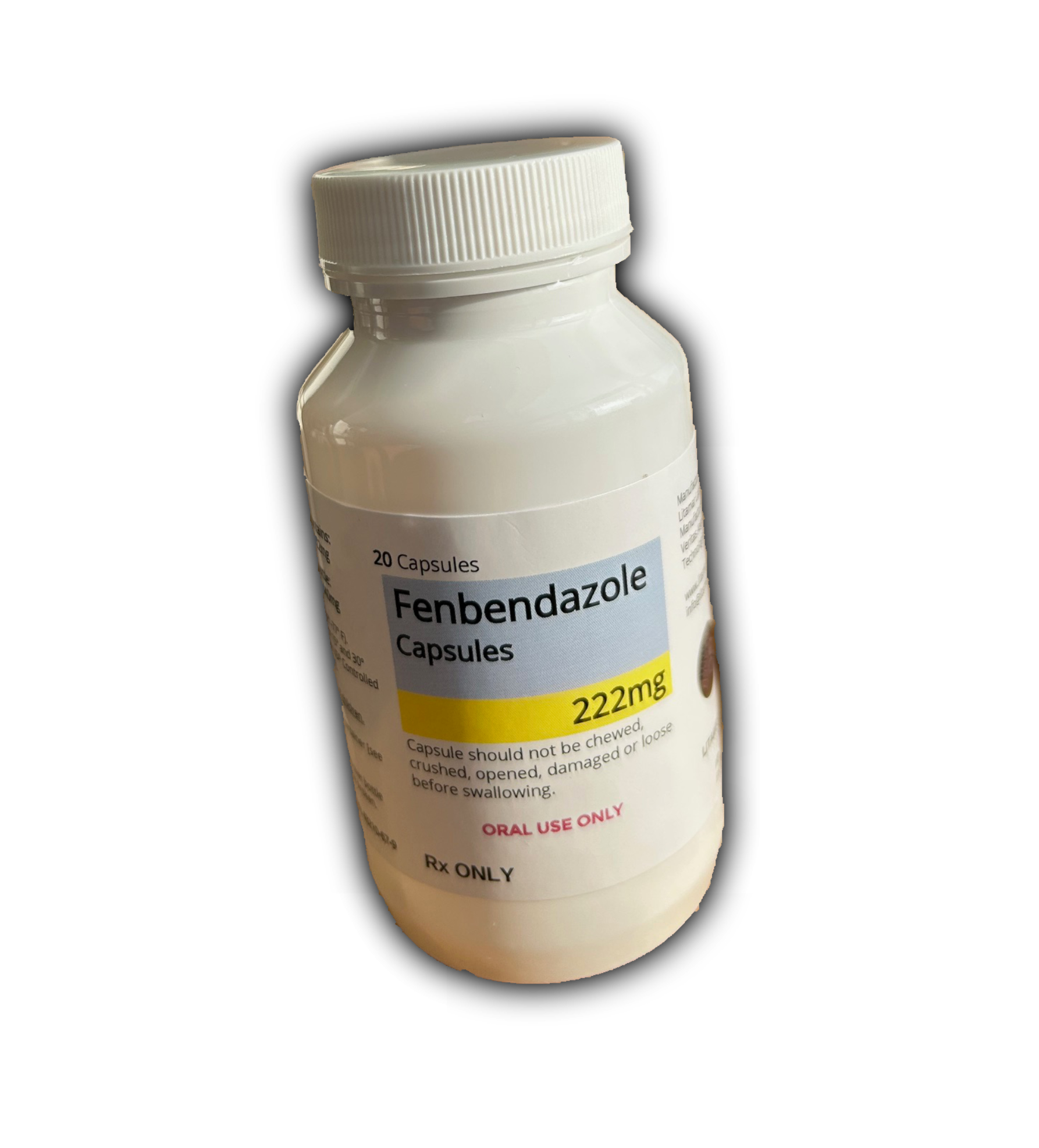
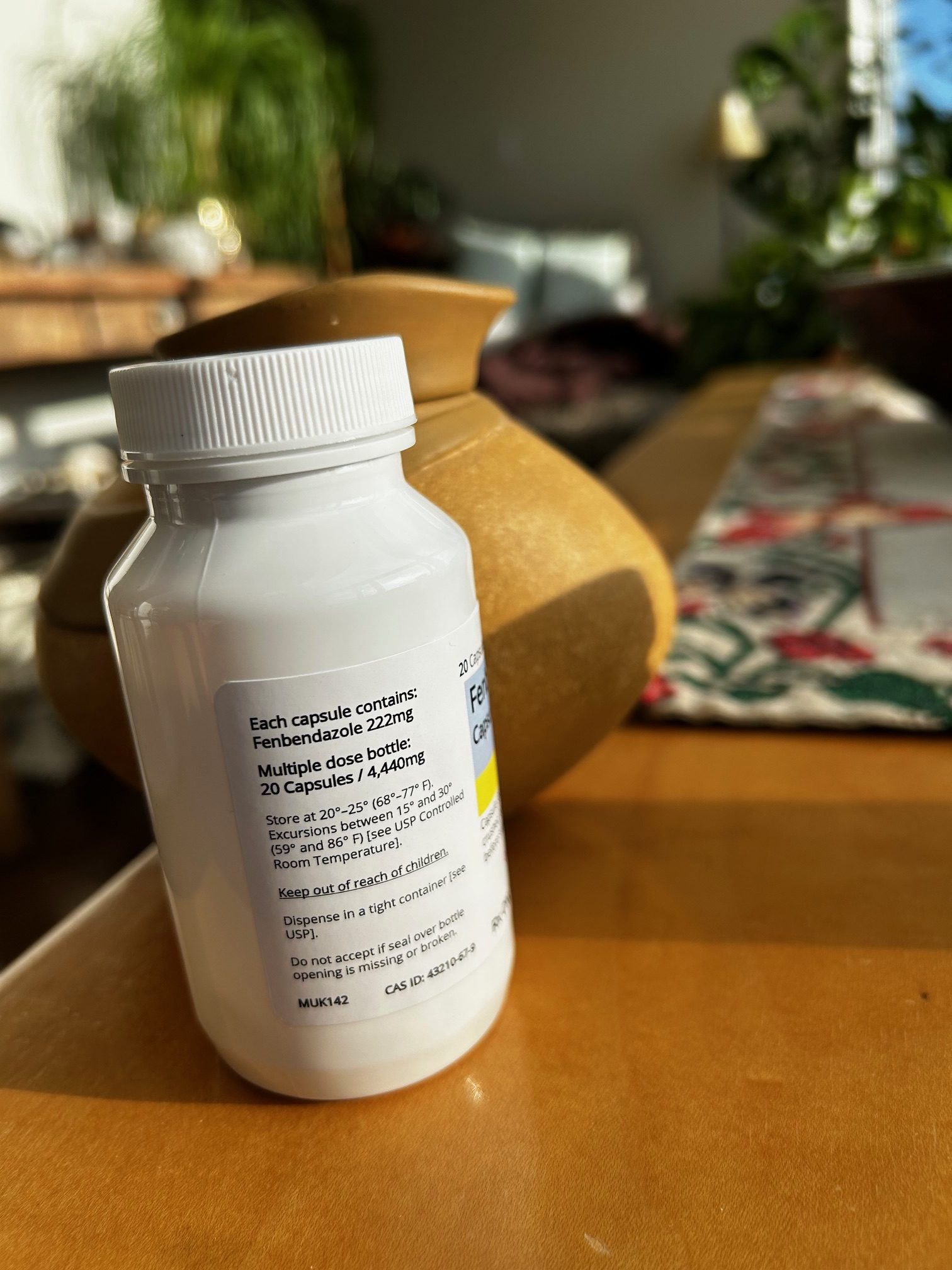
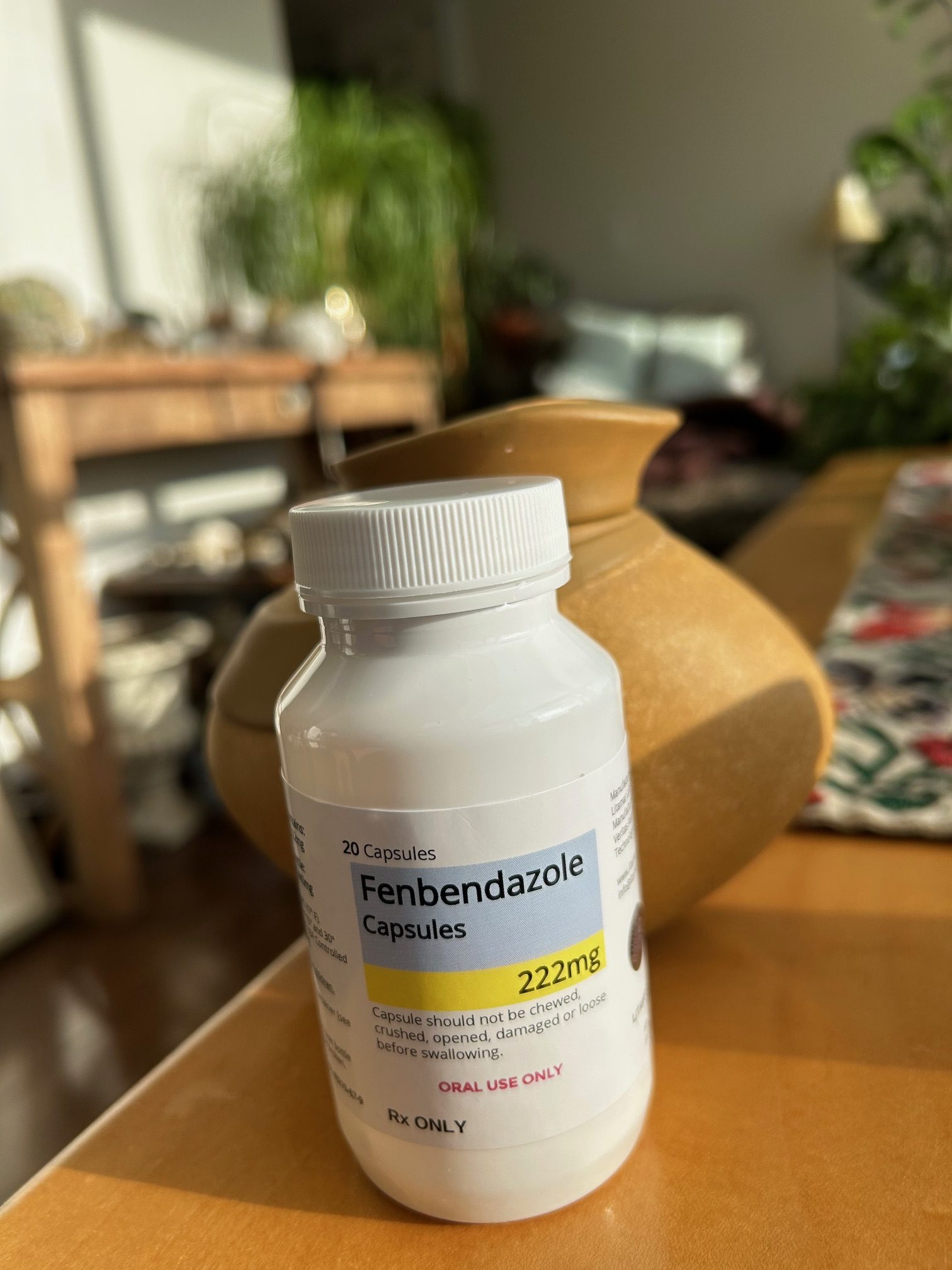
Description
Oral Fenbendazole for Cancer Therapy in Humans and Animals.
Fenbendazole is a benzimidazole anthelmintic agent commonly used to treat animal parasitic infections. In humans, other benzimidazoles, such as mebendazole and albendazole, are used as antiparasitic agents. Since fenbendazole is not currently approved by the FDA or EMA, its pharmacokinetics and safety in humans have yet to be well-documented in medical literature. Despite this, insights can be drawn from existing in vitro and in vivo animal studies on its pharmacokinetics. Given the low cost of fenbendazole, its high safety profile, accessibility, and unique anti-proliferative activities, fenbendazole would be the preferred benzimidazole compound to treat cancer. To ensure patient safety in the repurposing use of fenbendazole, it is crucial to perform clinical trials to assess its potential anticancer effects, optimal doses, therapeutic regimen, and tolerance profiles. This review focuses on the pharmacokinetics of orally administered fenbendazole and its promising anticancer biological activities, such as inhibiting glycolysis, down-regulating glucose uptake, inducing oxidative stress, and enhancing apoptosis in published experimental studies. Additionally, we evaluated the toxicity profile of fenbendazole and discussed possibilities for improving the bioavailability of the drug, enhancing its efficacy, and reducing potential toxicity.
Fenbendazole, also known as methyl N-(6-phenylsulfanyl-1H-benzimidazole-2yl), is currently used as an antiparasitic therapeutic agent in dogs and other animals. In humans, other benzimidazoles, such as mebendazole and albendazole, are used as antiparasitic agents (1). Fenbendazole exerts its antiparasitic effects primarily in the anterior intestine by depolymerizing microtubules, inhibiting intestinal secretory vesicle transport. Fenbendazole binds to beta-tubulin in parasites, causing microtubule destabilization and hindering tubulin polymerization. This destabilization disrupts cellular function, such as glucose uptake, thereby affecting the energy management of parasites. Due to its poor absorption by oral administration, fenbendazole is particularly effective for targeting intestinal parasites (2).
In August 2016, fenbendazole garnered global attention as a potential anti-cancer therapy following the complete recovery success story of Joe Tippens, who was diagnosed with small-cell lung cancer. At the time, Tippens was undergoing a clinical trial for a novel anti-cancer drug. Meanwhile, under the guidance of a veterinarian, Tippens began self-administering 222 mg fenbendazole orally, along with vitamin E supplements, CBD oil, and bioavailable curcumin. After three months of self-administration, a PET scan revealed no detectable cancer cells in his body. Notably, Tippens was the only patient cured of cancer among the 1,100 clinical trial participants (3). While the Joe Tippens case is compelling, it remains an anecdotal report. It underscores the need for rigorous clinical trials to validate the efficacy and safety of fenbendazole as an anti-cancer therapy.
The anti-cancer activity of fenbendazole has been studied across many cell lines, demonstrating anti-tumor effects against multiple cancer types (Table I) (4-7). Additionally, fenbendazole has shown efficacy against 5-FU, paclitaxel, and docetaxel-resistant cancer cells (5, 8, 9). Compared to albendazole, fenbendazole was more effective against 5-FU-resistant colorectal cells, likely due to its intervention in glycolysis (5).
Although fenbendazole exhibits promising anti-cancer effects, experimental studies indicated its poor water solubility has hindered its therapeutic performance. When administered orally, fenbendazole struggles to reach systemic circulation and, subsequently, the therapeutic levels necessary to impact tumors (10-12). Addressing pharmacokinetic limitations is crucial to repurposing fenbendazole for cancer treatment.
This review focuses on the pharmacokinetics of fenbendazole when administered orally and its promising anticancer biological activities, such as inhibiting glycolysis, down-regulating glucose uptake, inducing oxidative stress, and enhancing apoptosis. In addition, we evaluate the toxicity profile of fenbendazole and discuss possibilities for improving the bioavailability of the drug, enhancing its efficacy, and reducing potential toxicity. This comprehensive review aims to provide a detailed understanding of fenbendazole’s potential as a repurposed anti-cancer agent and outline the necessary steps for its clinical application.
Anti-cancer Mechanisms and Targets of Fenbendazole
Studies attribute the anti-cancer mechanisms of fenbendazole to increasing p53 activation, inhibiting the GLUT1 transporter and hexokinase, and reducing glucose uptake in cancer cells (4). Enhanced glycolysis is a crucial signal of tumor progression (13-15). Under anaerobic conditions, glycolysis produces lactate, which increases acidification in the tumor microenvironment and leads to drug resistance (16). Metabolic disturbances, such as glutamine overuse, further enhance glycolysis, creating a feedback loop for tumor growth (15, 17). Fenbendazole has been found to inhibit glucose uptake, resulting in reduced lactate levels (4). Thus, fenbendazole can serve as a viable treatment for drug-resistant cancer cells.
Fenbendazole exhibits several other mechanisms contributing to its anti-cancer effects, primarily by disrupting energy metabolism. It functions as a microtubule destabilizing agent, impairs proteasomal function, and inhibits glucose metabolism. Glucose, a primary energy source for tumor cells, is metabolized through aerobic glycolysis and delivered across the cell membrane via the GLUT1 transporter (18). Unlike normal cells, cancer cells perform glycolysis to metabolize glucose to lactate even under aerobic conditions (13, 16, 19). Although aerobic glycolysis is not an efficient method of supplying energy and appears to produce less ATP than oxidative phosphorylation, it provides essential materials for tumor cell growth, such as nucleotides, amino acids, and lipids (20, 21). Additionally, the ATP/ADP and NADH/NAD+ ratios in tumor cells remain high, indicating sufficient ATP supply through glycolytic tumor metabolism (22).
The GLUT1 transporter has been highly expressed in 99% of patients with squamous cell carcinoma and 50% of patients with adenocarcinoma (23-25), leading to being proposed as a promising therapeutic target in cancer therapy (26). Fenbendazole induces mitochondrial translocation of p53, indicating activation of the p53-p21 pathway, which inhibits GLUT transporter expression and prevents glucose uptake in cancer cells (4). Through p53 activation, fenbendazole is believed to impede hexokinase II (HKII) (4, 7), the first glycolytic pathway enzyme critical for cancer cell growth. However, another study did not observe inhibition of HKII activity at 1 and 10 μM fenbendazole (10). As a primary enzyme in glucose metabolism, the inhibition of HKII would prevent tumor development (4, 27, 28). Therefore, fenbendazole’s actions on HKII warrant further exploration. Thus, through targeting GLUT1, HKII, and glycolysis, fenbendazole can lead to cancer cell starvation and reverse drug resistance, aiding cancer treatment.
In addition to glycolysis inhibition, fenbendazole induces apoptosis in cancer cells (4-7). In colorectal cancer (CRC) cells, fenbendazole triggers apoptosis through mitochondrial injury and the caspase 3-PARP pathway. In wild-type CRC, fenbendazole activates p53-mediated apoptosis by increasing p53 expression. Additionally, it induces necrosis, autophagy, and ferroptosis. In 5-FU-resistant CRC, fenbendazole triggers apoptosis without affecting p53 expression, likely enhancing p53-independent ferroptosis-augmented apoptosis (5).
Fenbendazole also acts as a microtubule destabilizing agent. Microtubule-targeting agents are promising cancer treatments due to the microtubules’ roles in mitosis, cell structure maintenance, and other cellular events (29-33). Some cancer therapy drugs inhibit microtubule polymerization (vincristine, vinblastine), while others stabilize microtubules (paclitaxel, docetaxel), leading to apoptosis and metaphase arrest (34). Fenbendazole shows microtubule depolymerizing activity in human cancer cell lines and demonstrates anticancer effects in vitro and in vivo (4, 10, 35). Fenbendazole induces cell cycle arrest in the G2/M phase (4, 36) and demonstrates tubulin destabilization activity at concentrations of 1 and 10 μM, with more cell cycle arrest demonstrated at higher concentrations (10 μM) (10).
When administered orally at micromolar concentrations, fenbendazole induces cytotoxicity and effectively blocks cancer cell growth. Fenbendazole also causes oxidative stress and activates the MEK3/6-p38MAPK pathway, inhibiting cancer cell proliferation and enhancing apoptosis. Fenbendazole reduces toxicity to normal cells while maintaining its anti-cancer effects of impairing energy metabolism and restraining cancer cell migration and invasion (37). Beyond oncology, fenbendazole shows potential in treating pulmonary fibrosis by inhibiting the progression of bleomycin-induced lung fibrosis (36).
Pharmacokinetics of Fenbendazole
Given that fenbendazole has not been approved for regulatory use in humans, pharmacokinetic data for this drug is limited. While no clinical trials have tested fenbendazole in humans, insights can be drawn from in vitro and in vivo animal studies. The FDA recently granted a fast-track designation for developing oxfendazole, a major metabolite of fenbendazole, to treat human trichuriasis. Pharmacological studies of oxfendazole can help supplement the understanding of fenbendazole’s pharmacokinetics in humans.
Fenbendazole undergoes partial absorption in the liver, where it is rapidly metabolized by flavin-monooxygenase (FMO) and CYP3A4 enzymes to become its sulfoxide derivative, oxfendazole (fenbendazole sulfoxide) (38, 39). Additionally, CYP2J2 and CYP2C19 enzymes metabolize fenbendazole into hydroxyfenbendazole (40). Another metabolic pathway converts fenbendazole into fenbendazole sulfone (41, 42) by pre-systemic and systemic metabolism (43). Although fenbendazole sulfone predominates in the plasma following administration (41), oxfendazole is the primary metabolite responsible for the biological activity of fenbendazole (44). Through systemic metabolism (43), oxfendazole is reduced back to fenbendazole (44) rather than first-pass metabolism


admin –
Amazing and a miracle product.